
On November 3, 2026, the Department of international law organized a guest lecture entitled “Mediation and mediation agreements in the context of the New Constitution of the Republic of Kazakhstan” for 2nd, 3rd and 4th-year students of the educational programmes 6B04201 – Jurisprudence and 6B04202 – International Law with the participation of guest speakers Nurgul Aliyevna Mambetova, Director of the law firm “Postfactum Law” and Kuralai Dzhapashevna Dmumagulova, a practicing lawyer and mediator.
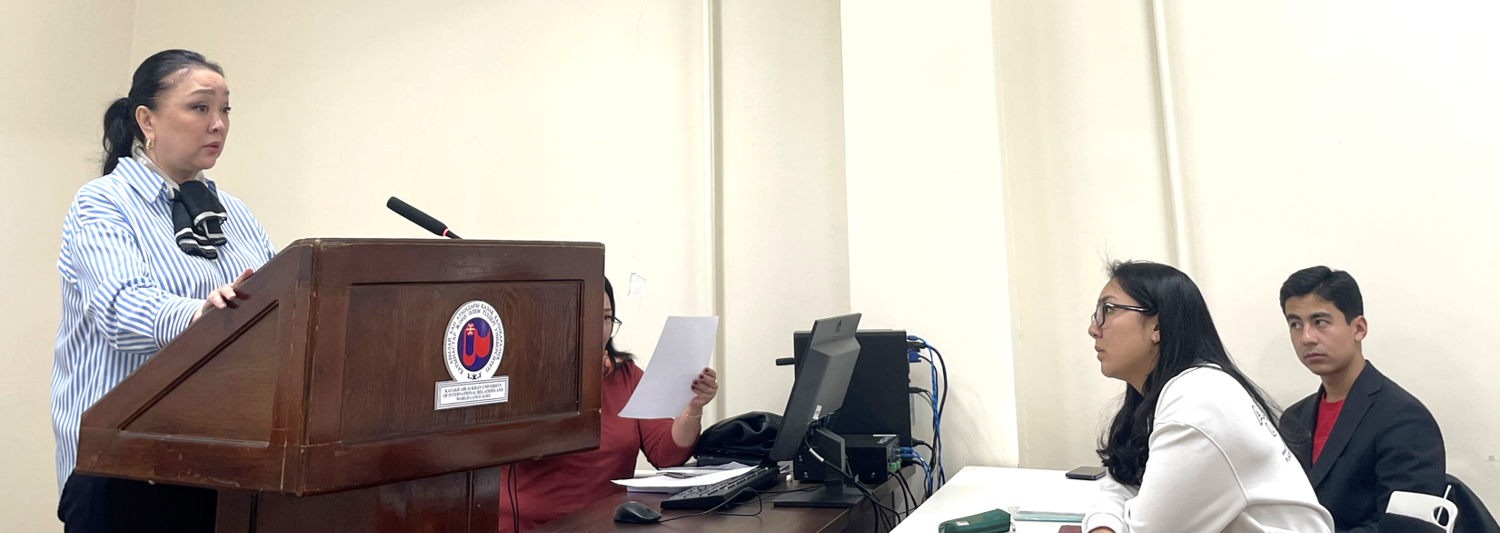
The aim of the event was to provide students with a practical understanding of mediation as an effective legal mechanism for dispute resolution, grounded in the constitutional values of human rights protection, the rule of law, and the promotion of dialogue within society.
During the lecture, the invited experts explored the essence and legal nature of mediation, highlighting its fundamental principles, including voluntariness, equality of the parties, and confidentiality. Particular attention was paid to the constitutional foundations of mediation, its role in safeguarding the rights and legitimate interests of individuals, and the importance of reconciliation procedures in the evolving legal system of the Republic of Kazakhstan.
The speakers provided a detailed overview of the areas in which mediation can be applied, including the resolution of civil, family, labor, administrative, and certain criminal disputes, as well as its application in enforcement proceedings.
A separate part of the lecture focused on mediation agreements as legal instruments for dispute resolution. The participants were introduced to the specific features of entering into mediation contracts and dispute settlement agreements, their legal significance, and the procedures for applying reconciliation mechanisms in judicial and administrative practice, with reference to the Civil Procedure Code and the Administrative Procedural and Process-Related Code of the Republic of Kazakhstan.
The practical component of the event involved the examination of case studies concerning debt-related disputes, family conflicts, and commercial disputes. Through real-world examples, the speakers demonstrated how negotiations and mediation procedures can facilitate mutually acceptable solutions.
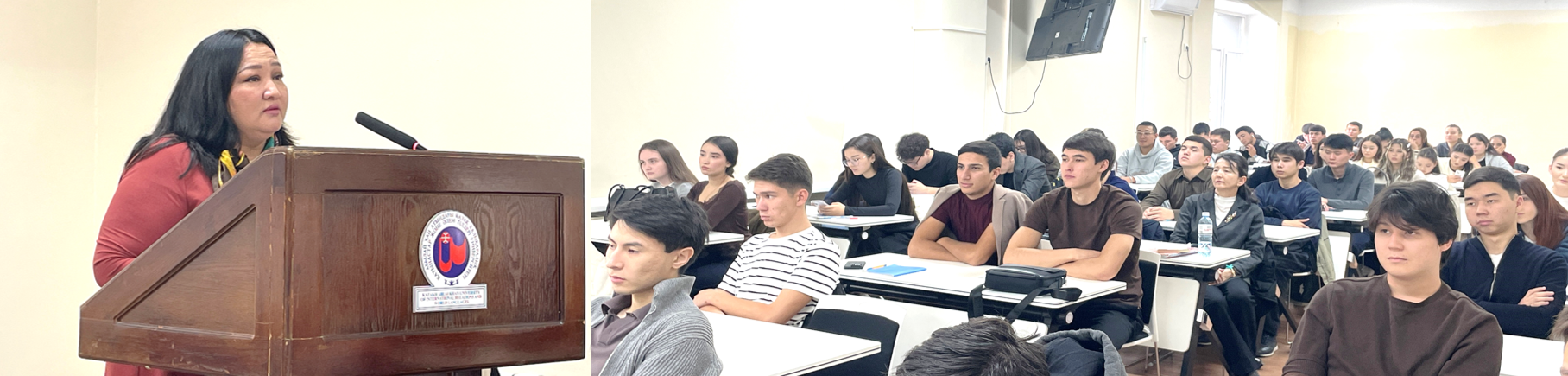
The lecture was conducted in an engaging and interactive discussion format, generating considerable interest among the students. Participants actively contributed to the discussion and raised questions regarding the practical application of mediation, the conclusion and enforcement of mediation agreements, and the possibilities of resolving legal disputes without resorting to litigation. This open exchange provided students with a valuable opportunity to receive insights directly from legal practitioners, discuss current issues in legal practice, and deepen their understanding of the role of mediation in the contemporary legal system.
The guest lecture contributed to strengthening cooperation between the Department of international law and representatives of the legal profession, enhancing the practice-oriented nature of legal education, and developing the professional competencies of future lawyers in the field of alternative dispute resolution.
Such events play an important role in bridging theoretical knowledge and practical experience, improving students’ legal literacy, and fostering the skills required for the effective resolution of legal disputes.
.png)