


As part of the informational campaign of the Ministry of Science and Higher Education aimed at improving legal literacy and fostering zero tolerance toward forced marriage, stalking, and other forms of violence against women, psychologist Nizamudin Mukhabbat delivered a lecture titled “Stalking: Where Attention Ends and Danger Begins.”
The purpose of the event was to raise students’ awareness of the phenomenon of stalking, its signs and legal consequences, as well as to develop an understanding of the boundaries between acceptable behavior and violence in interpersonal relationships.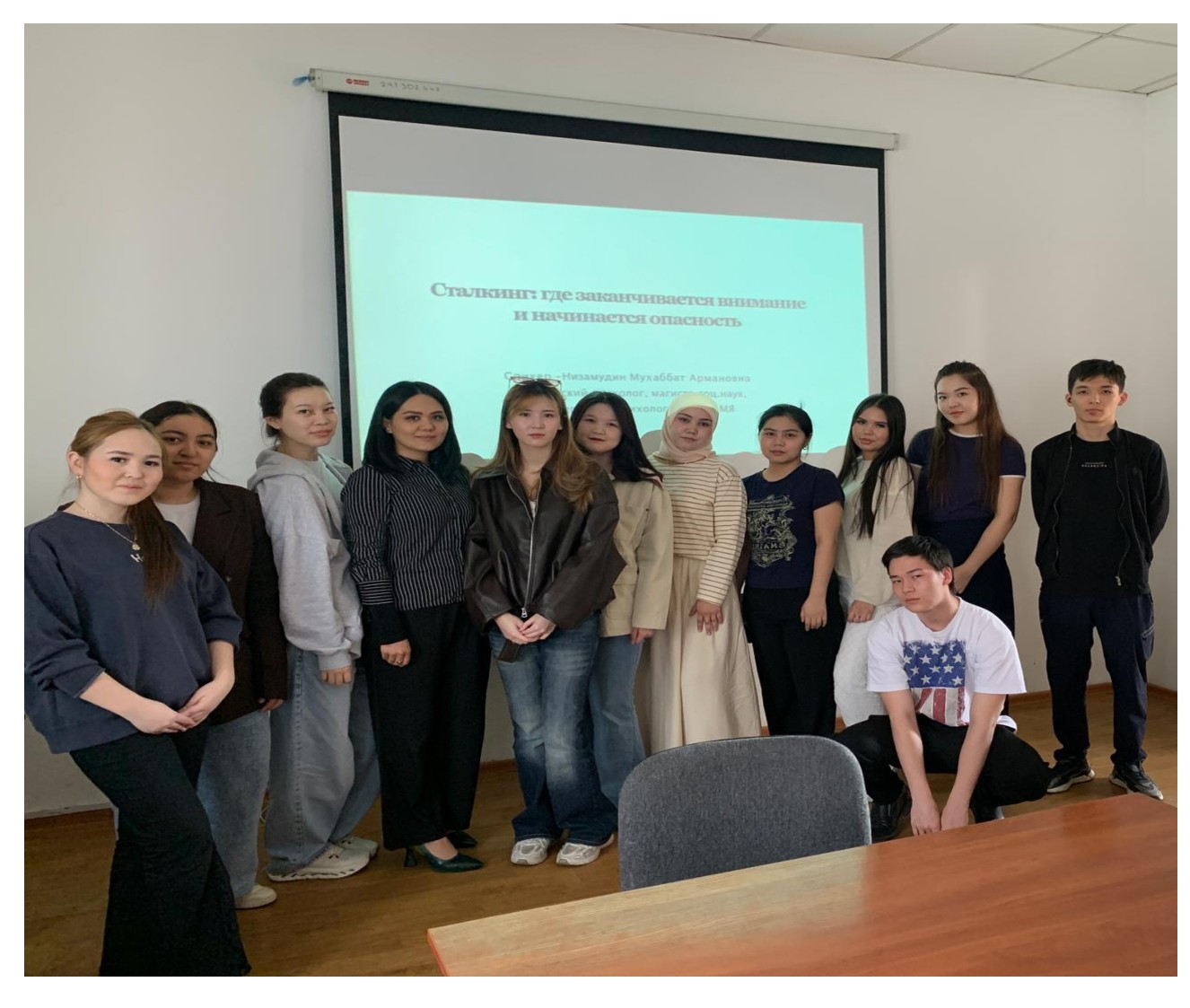
During the lecture, stalking was defined as a form of obsessive harassment that includes repeated attempts to establish contact, surveillance, intrusion into personal life, and actions that cause fear and psychological discomfort. Particular attention was given to the key characteristics of stalking, such as its systematic nature, the undesirability of contact, and elements of control and intimidation.
A separate part of the lecture was devoted to examining stalking within the broader context of abusive relationships. It was emphasized that intrusive behavior is often mistakenly perceived as a sign of attention or interest, while in reality it may constitute part of an abusive dynamic. The provisions of the legislation of the Republic of Kazakhstan were also reviewed, according to which systematic harassment and interference in private life are criminally punishable acts.
The lecture also addressed personality traits that may be characteristic of individuals prone to violent behavior. Traits such as emotional instability, impulsivity, narcissistic tendencies, and antisocial behavior were discussed. Special emphasis was placed on the fact that, at early stages of interaction, such individuals may display socially attractive behavior, making it difficult to recognize potential risks in a timely manner.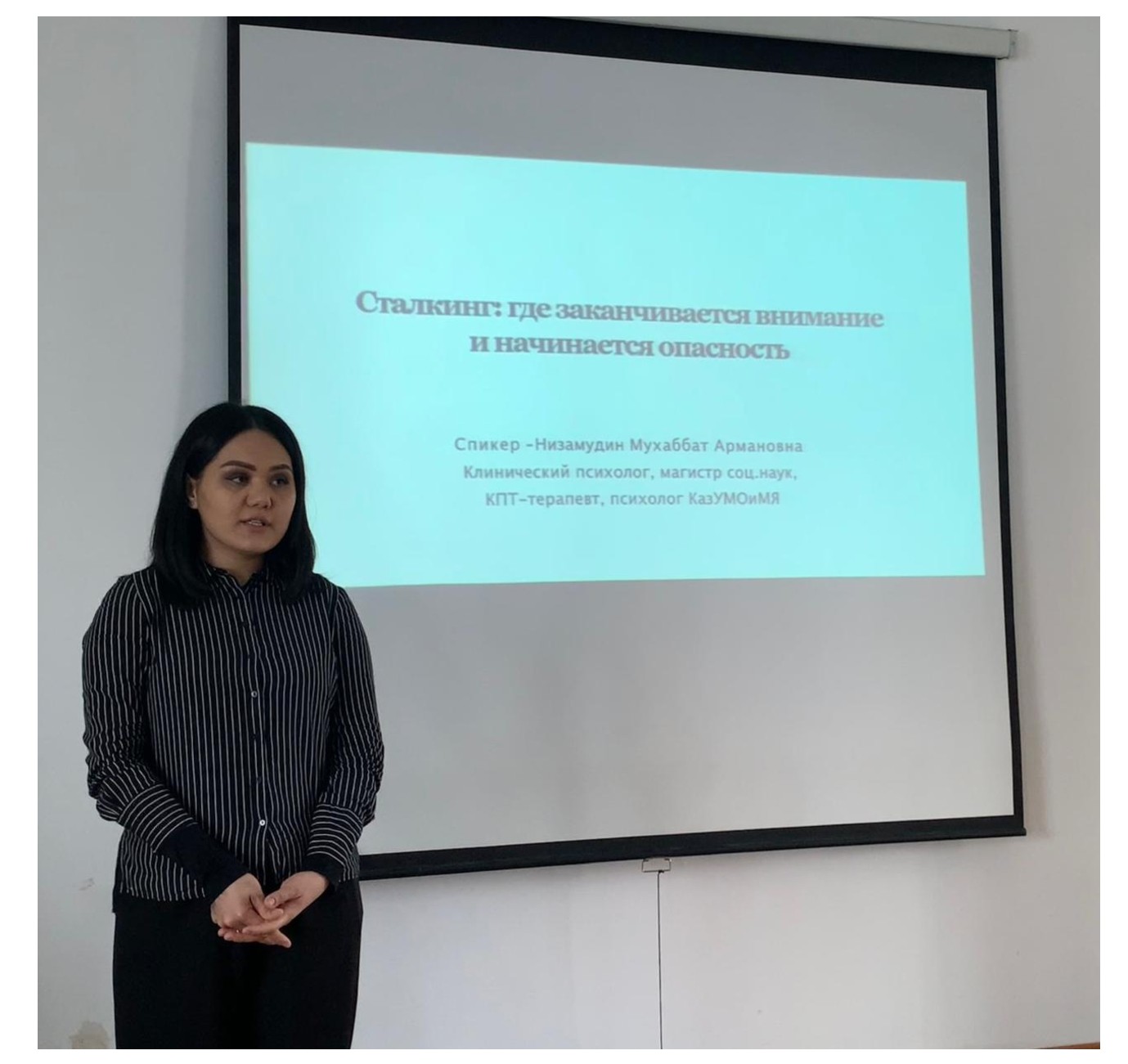
An important component of the lecture was its preventive focus. Students were provided with recommendations on developing psychological resilience and building protective mechanisms. In particular, the importance of recognizing one’s own emotions and personal boundaries, developing self-regulation skills, and fostering zero tolerance for any form of violence was discussed.
Special attention was also given to the signs of healthy relationships, including mutual respect, respect for personal boundaries, emotional safety, and support.
Students actively engaged in the discussion, asked questions, and shared their observations and examples, which indicates the high relevance of the topic and the strong interest of the audience. The lecture created a space for open dialogue and contributed to enhancing the psychological literacy of the participants.
.png)