

In March 2026, within the framework of the academic international cooperation program, a series of lectures was delivered at the Faculty of Translation and Philology by invited Professor Jürgen Capitain (Germany/Switzerland), who has many years of teaching and research experience in the field of philology and foreign language teaching methodology.
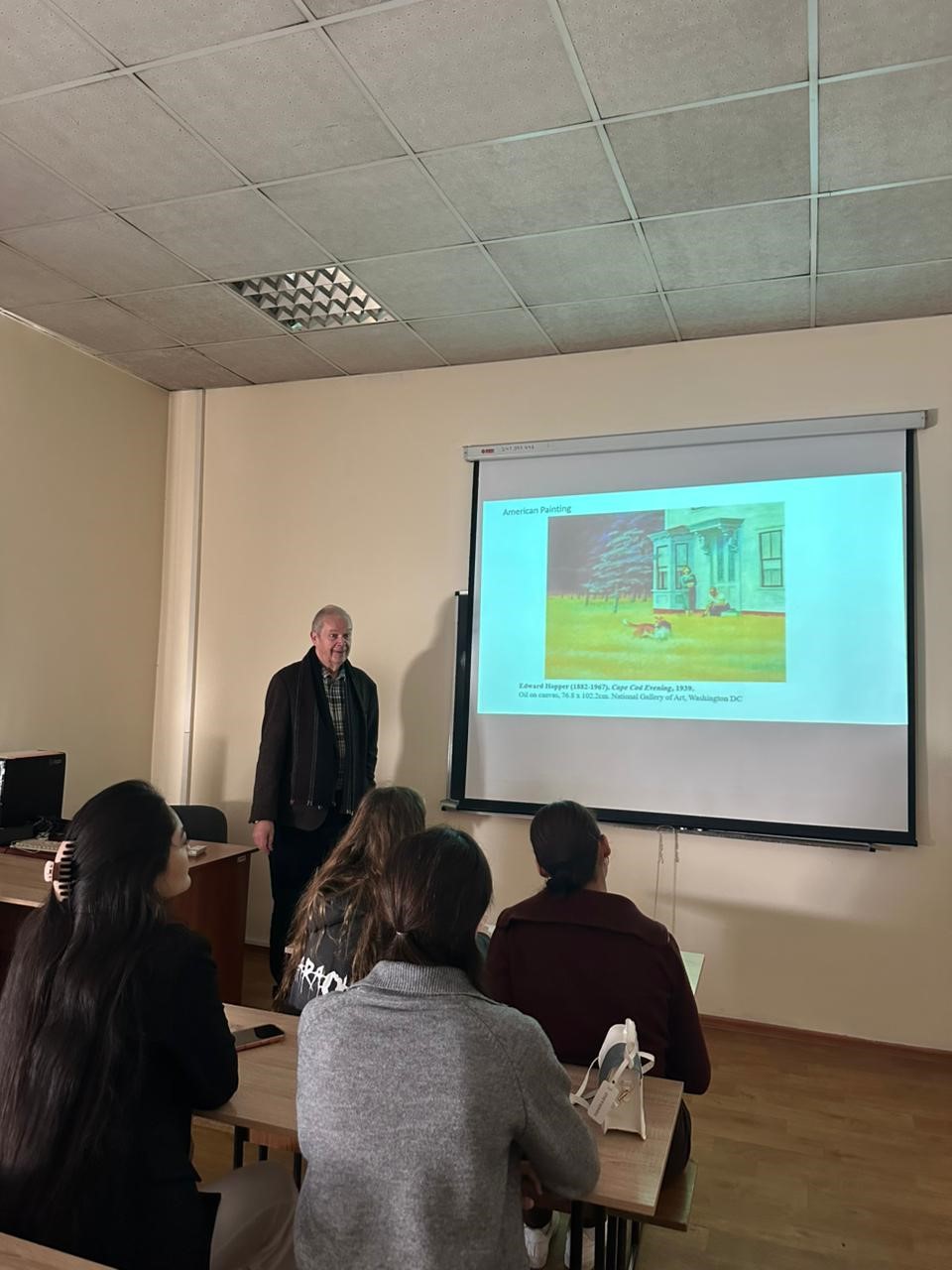
One of the key lectures, entitled “Mythology I: Functions of Mythology”, was held on March 4, 2026, for the faculty members. The lecture focused on the analysis of the functions of mythology in cultural and literary contexts.
During the lecture, the professor provided a detailed examination of the main functions of myths, including explanatory, symbolic, and cultural-identificational functions. Special attention was paid to the role of mythology as a means of understanding the surrounding world, shaping values, and transmitting collective experience. The lecturer presented examples from European and world literature, demonstrating how mythological images are transformed and continue to function in contemporary cultural space.
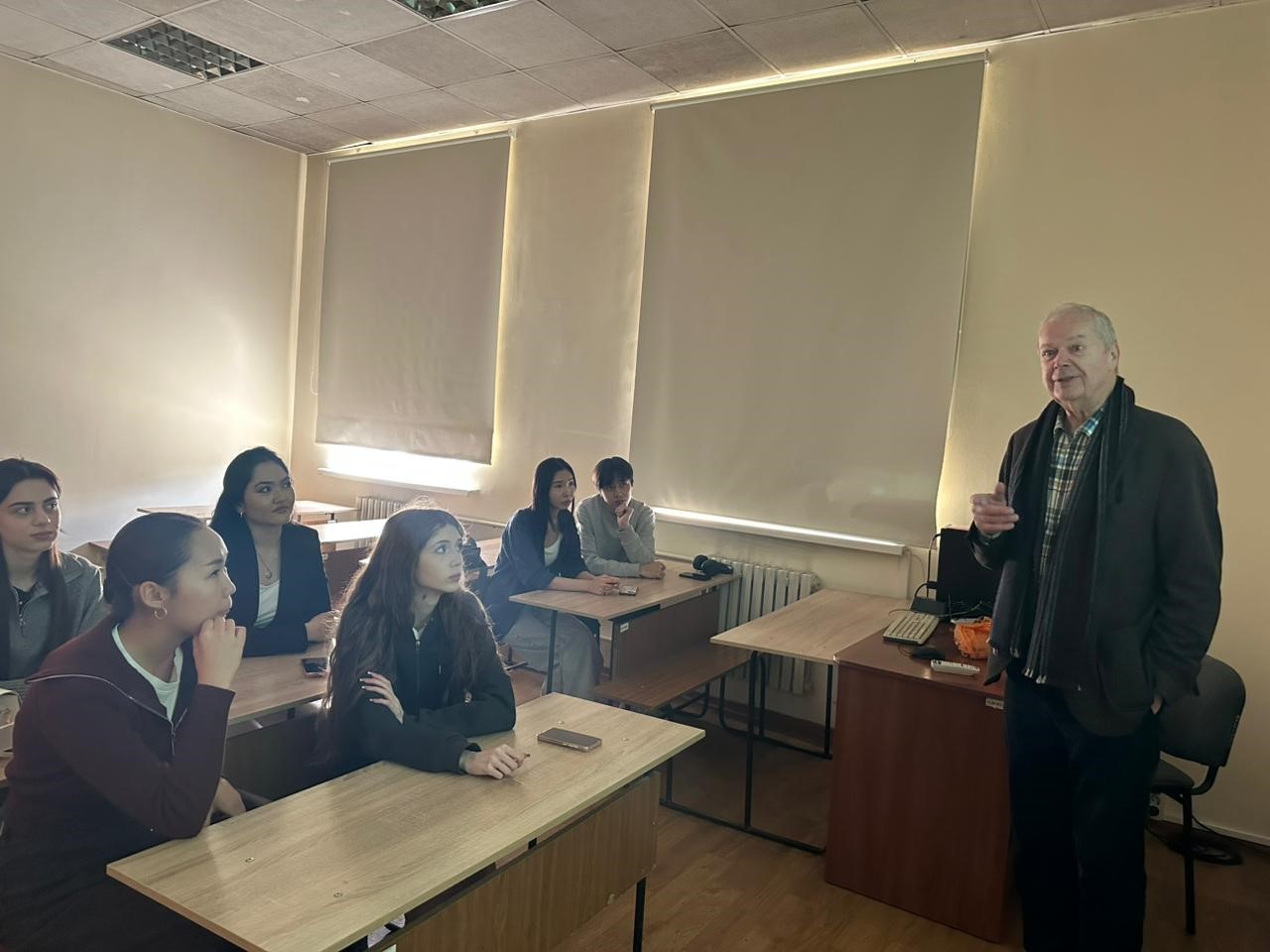
The professor actively interacted with the audience, asked questions, and engaged participants in discussion, which contributed to a deeper understanding of the topic. The lecture was supported by examples from literary texts and interdisciplinary commentary, allowing mythology to be considered not only from a literary perspective but also from cognitive and cultural viewpoints.
The following lecture, “Mythology II: Myths in Modern Literature” (March 11, 2026), was a logical continuation of the first and focused on the functioning of mythological plots in contemporary literature. Another lecture, “Mythology III: The Arthurian Legends in the History and Literature of Great Britain and the USA” (March 18, 2026), examined Arthurian legends as an important cultural and literary phenomenon.
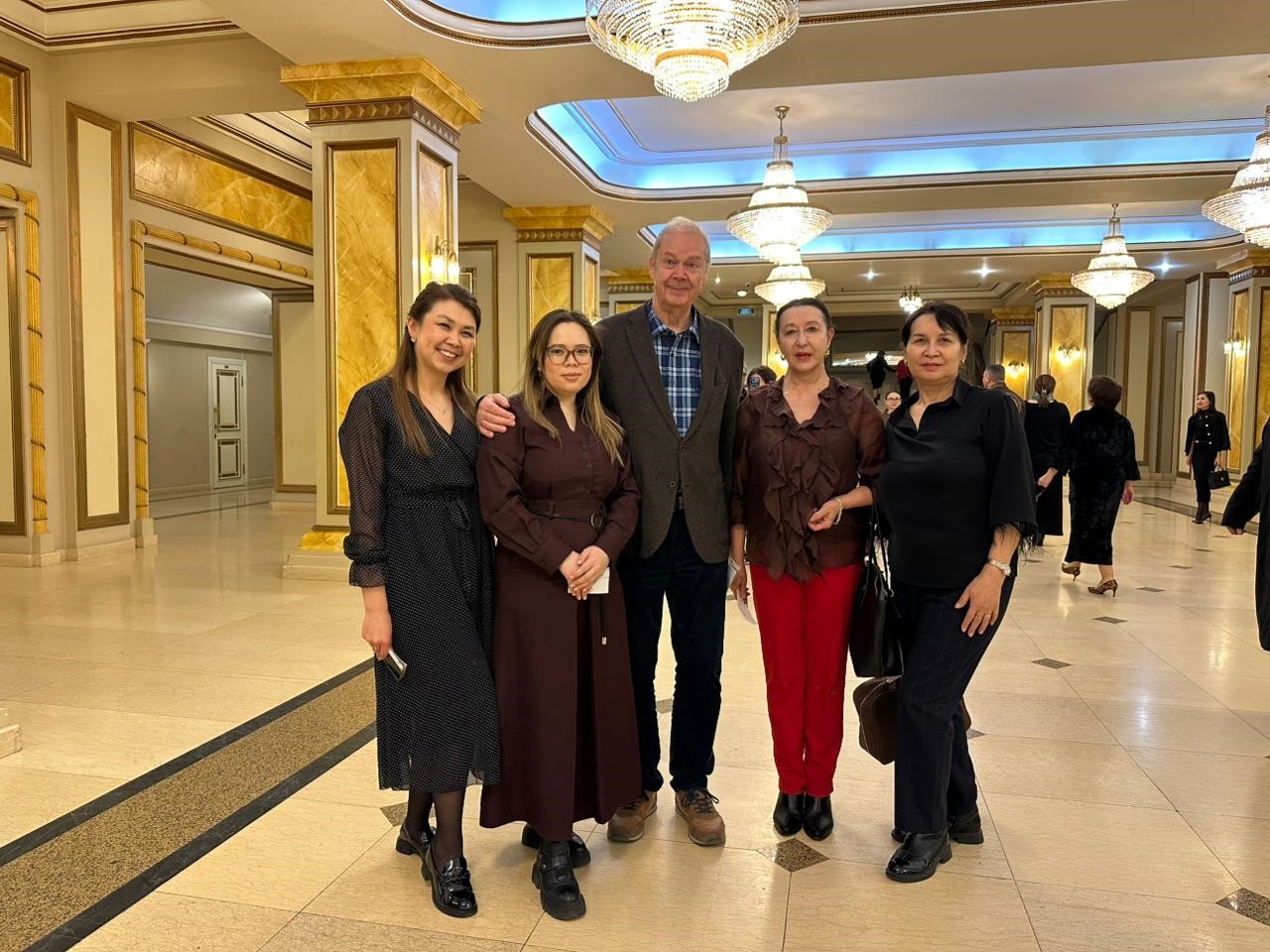
An important addition to the academic program was a joint cultural activity – a visit to the Abai Kazakh State Academic Opera and Ballet Theatre. This event contributed to the deepening of intercultural dialogue, allowed participants to experience the rich cultural heritage of Kazakhstan, and created an informal educational environment for the exchange of impressions.
The professor’s lectures were distinguished by high academic value, logical structure, and relevance of content. The use of comparative and interpretative approaches enabled participants to broaden their understanding of the role of mythology in language, culture, and literature.
Overall, the lectures had a positive impact on the professional development of the faculty and contributed to the deepening of knowledge in the fields of cognitive linguistics, literary studies, and intercultural communication
.png)